Introduction: Industrial Reliability Starts with Strong Tube Connections
Let’s get straight to it — in modern industrial systems, even the smallest fitting can determine whether an entire operation runs smoothly or suffers from leakage, pressure failure, or corrosion damage.
Industries today operate under increasingly aggressive conditions involving:
• High pressure
• Chemical exposure
• Thermal cycling
• Moisture and oxidation
• Continuous process operations
That’s exactly why Stainless Steel Tube Fittings have become one of the most trusted solutions across industrial infrastructure worldwide.
Grades like Stainless Steel 304, 304L, 316, 316L, 321, and 347 are engineered to provide exceptional corrosion resistance, thermal stability, and leak-proof performance for critical tubing systems.
From offshore oil platforms and petrochemical plants to pharmaceutical systems and power generation facilities, these stainless steel grades continue to power modern industrial operations.
What Are Stainless Steel Tube Fittings?
Stainless steel tube fittings are precision-engineered components used to connect, control, redirect, or terminate tubing systems within industrial applications.
These fittings are essential for maintaining:
• Pressure stability
• Leak-proof flow systems
• Corrosion protection
• Process safety
• Long operational reliability
Tube fittings are commonly used in:
• Instrumentation systems
• Hydraulic systems
• Pneumatic systems
• Chemical transfer pipelines
• Gas distribution systems
Their high strength and corrosion resistance make them ideal for demanding industrial environments.
Why Stainless Steel Tube Fittings Dominate Modern Industries
Industrial facilities today require tubing systems capable of operating continuously without leakage or corrosion-related failures.
That’s where stainless steel tube fittings stand out.
They provide:
• High corrosion resistance
• Excellent pressure capability
• Superior heat resistance
• Strong mechanical stability
• Long-term operational durability
This makes stainless steel one of the most reliable materials for industrial tubing applications.
Key Advantages of Stainless Steel Tube Fittings
Exceptional Corrosion Resistance
Stainless steel fittings resist:
• Chlorides
• Acids
• Moisture
• Oxidation
• Industrial chemicals
This improves reliability in aggressive operating environments.
Leak-Proof Performance
Precision-engineered stainless steel tube fittings help industries maintain secure and leak-free tubing systems under pressure-intensive conditions.
High Temperature Stability
Grades such as SS 321 and SS 347 perform exceptionally well under elevated temperatures and continuous thermal exposure.
Long Service Life
These fittings significantly reduce:
• Maintenance frequency
• Corrosion-related failures
• Leakage risks
• Operational downtime
This improves overall industrial efficiency and long-term productivity.
Technical Specifications Table
| Parameter | Specification |
| Product Type | Stainless Steel Tube Fittings |
| Grades | SS 304, 304L, 316, 316L, 321, 347 |
| Standards | ASTM / ASME / ANSI |
| Types | Compression / Ferrule / Instrumentation |
| Size Range | 1/8” to 2” |
| Connection Type | Threaded / Compression |
| Pressure Rating | High-pressure compatible |
| Applications | Hydraulic, Pneumatic & Instrumentation Systems |
Understanding Major Stainless Steel Tube Fitting Grades
Stainless Steel 304 Tube Fittings
Stainless Steel 304 Tube Fittings are among the most widely used stainless steel fittings across industrial sectors.
Key Features
• Excellent corrosion resistance
• Good mechanical strength
• Cost-effective performance
• Easy fabrication
Applications
• Water systems
• Food processing plants
• Instrumentation systems
• Utility piping systems
SS 304 fittings provide reliable performance in general industrial applications requiring corrosion resistance and strength.
Stainless Steel 304L Tube Fittings
Stainless Steel 304L Tube Fittings contain lower carbon content compared to standard 304 grades.
Advantages
• Better weldability
• Reduced carbide precipitation
• Improved intergranular corrosion resistance
Used In
• Welded process systems
• Industrial instrumentation lines
• Chemical transfer systems
304L fittings are preferred where welding operations are critical.
Stainless Steel 316 Tube Fittings
Stainless Steel 316 Tube Fittings contain molybdenum, significantly improving corrosion resistance.
Key Benefits
• Excellent chloride resistance
• Superior chemical resistance
• Enhanced marine durability
• Outstanding corrosion protection
Applications
• Offshore systems
• Marine environments
• Chemical processing plants
• Petrochemical systems
SS 316 fittings are ideal for aggressive industrial environments involving corrosive chemicals and seawater exposure.
Stainless Steel 316L Tube Fittings
Stainless Steel 316L Tube Fittings combine low carbon content with enhanced corrosion resistance.
Features
• Excellent weldability
• High chloride resistance
• Reduced intergranular corrosion
• Superior long-term durability
Common Uses
• Pharmaceutical systems
• Offshore pipelines
• Food-grade process systems
• High-purity industrial applications
316L fittings are widely preferred for critical corrosion-resistant systems.
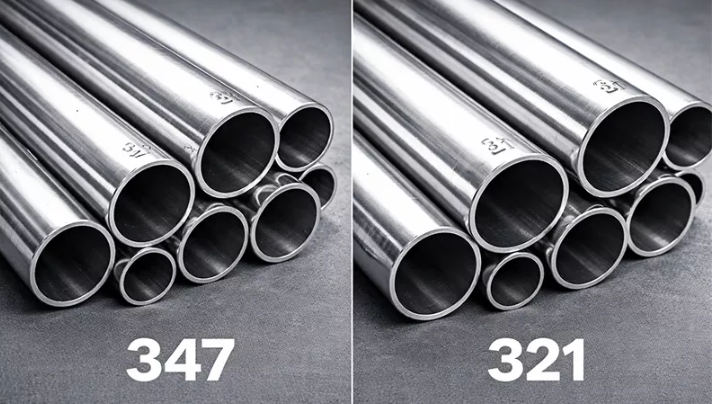
Stainless Steel 321 Tube Fittings
Stainless Steel 321 Tube Fittings contain titanium stabilization for improved thermal stability.
Advantages
• Excellent heat resistance
• Superior oxidation resistance
• Good high-temperature performance
Applications
• Heat exchangers
• Furnace piping
• Thermal processing systems
• Aerospace applications
SS 321 fittings are ideal for elevated temperature operations.
Stainless Steel 347 Tube Fittings
Stainless Steel 347 Tube Fittings contain niobium stabilization for enhanced high-temperature corrosion resistance.
Key Features
• Excellent thermal stability
• Superior oxidation resistance
• Strong high-temperature performance
Used In
• Refineries
• Thermal power plants
• Petrochemical systems
• High-pressure steam systems
SS 347 fittings perform exceptionally well under demanding thermal and pressure-intensive conditions.
Stainless Steel Grade Comparison Table
| Grade | Corrosion Resistance | Heat Resistance | Best Application |
| SS 304 | Good | Moderate | Utility systems |
| SS 304L | Good | Moderate | Welded systems |
| SS 316 | Excellent | High | Marine & chemical |
| SS 316L | Excellent | High | Offshore & pharma |
| SS 321 | Very Good | Excellent | Thermal systems |
| SS 347 | Excellent | Excellent | Refineries & power plants |
Types of Stainless Steel Tube Fittings
Elbows
Used to safely change flow direction within tubing systems.
Tees
Allow multidirectional flow distribution across process systems.
Reducers
Connect tubing systems of different diameters while maintaining stable flow.
Ferrule Fittings
Provide strong and leak-proof tube connections under pressure.
Unions
Allow easier installation and maintenance flexibility.
Couplings
Used to extend or securely connect tubing systems.
These fittings play a critical role in maintaining safe industrial operations.
Stainless Steel Tube Fittings vs Carbon Steel Fittings
| Property | Stainless Steel Fittings | Carbon Steel Fittings |
| Corrosion Resistance | Excellent | Moderate |
| Heat Resistance | High | Moderate |
| Maintenance Requirement | Low | Higher |
| Operational Life | Long | Medium |
| Chemical Resistance | Superior | Limited |
That’s why industries increasingly prefer stainless steel tube fittings for demanding industrial systems.
Industrial Applications of Stainless Steel Tube Fittings
Oil & Gas Industry
Used in:
• Offshore systems
• Hydraulic tubing
• Instrumentation systems
• Gas distribution networks
Petrochemical Plants
Provide reliable performance under corrosive chemical conditions.
Pharmaceutical Industry
Maintain high purity and corrosion resistance in sterile systems.
Marine & Offshore Applications
Offer excellent chloride and seawater resistance.
Food & Beverage Industry
Ensure hygienic and contamination-free process systems.
Power Generation Plants
Used in steam systems and high-temperature instrumentation lines.
Manufacturing Process of Stainless Steel Tube Fittings
Production Steps
• Stainless steel raw material selection
• Precision machining
• Threading and forming
• Heat treatment
• Surface finishing
• Pressure testing
• Final inspection
This ensures dimensional accuracy and industrial reliability.
Quality Testing & Inspection
Every Stainless Steel Tube Fitting undergoes extensive testing including:
• Hydrostatic testing
• PMI testing
• Mechanical analysis
• Pressure testing
• Corrosion resistance testing
• Dimensional verification
These tests ensure compliance with ASTM and ASME industrial standards.
Why Stainless Steel Tube Fittings Are Essential for Future Industrial Infrastructure
As industrial systems become increasingly automated and pressure-intensive, the demand for reliable tubing systems continues to grow.
Stainless Steel Tube Fittings provide:
• Leak-proof safety
• Corrosion protection
• Thermal stability
• Long operational life
• Reduced maintenance costs
That’s exactly why SS 304, 304L, 316, 316L, 321, and 347 Tube Fittings continue to remain essential across modern industrial infrastructure worldwide.
Conclusion
Stainless Steel 304, 304L, 316, 316L, 321, and 347 Tube Fittings are engineered for industries where corrosion resistance, thermal stability, pressure handling, and leak-proof performance are critical.
From offshore oil platforms and petrochemical plants to pharmaceutical systems and power generation facilities, these fittings provide the reliability required for modern industrial operations.
Their ability to withstand aggressive industrial environments makes stainless steel tube fittings one of the most trusted solutions for high-performance tubing systems worldwide.
