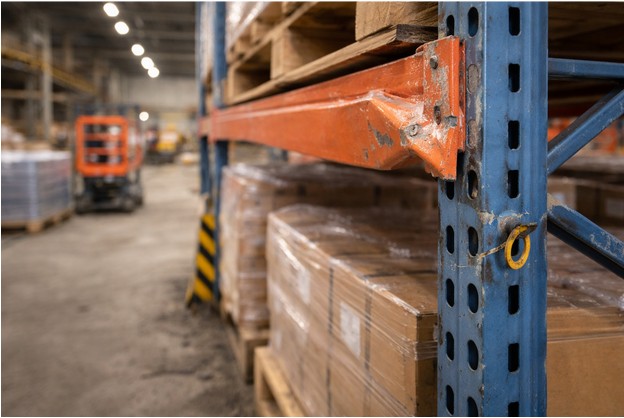
Warehouse racking systems are designed to handle significant loads, but they are not immune to wear and impact over time. In construction and facility environments, where activity levels and equipment movement are high, damage often develops gradually rather than through a single incident.
Recognizing early warning signs allows teams to address issues before they escalate into safety hazards or operational disruptions. For professionals managing sites in Toronto, this awareness is especially important as facilities move from construction phases into full warehouse operations.
Subtle Rack Damage Indicators That Often Go Unnoticed
Not all racking issues are immediately obvious. In many cases, the earliest rack damage indicators appear minor and are easy to overlook during routine work.
Small dents in upright frames, slight beam deflection, or chipped paint at impact points can signal underlying stress. These issues are often caused by repeated light contact from forklifts or material handling equipment. While each instance may seem insignificant, the cumulative effect can weaken the structure.
Another common sign is minor misalignment. If beams no longer sit level or uprights appear slightly out of plumb, it may indicate that the system has absorbed impact damage. Left unaddressed, this can affect load distribution and increase the risk of failure.
Construction teams and facility managers should treat these early signs as indicators of deeper structural concerns rather than cosmetic issues.
How Impact Damage Develops During Daily Operations
Impact damage is one of the leading causes of pallet racking deterioration. In active environments, equipment operators often work under time constraints, navigating tight aisles or temporary layouts.
Even low-speed contact can compromise racking components. Uprights are particularly vulnerable, as they bear the vertical load of the system. A single hit can reduce their load capacity, even if visible damage appears minimal.
During construction phases, these risks are amplified. Temporary storage setups, shifting workflows, and incomplete layouts create conditions where accidental contact is more likely. As a result, damage may begin before the warehouse is fully operational.
Understanding how these conditions contribute to long-term wear helps teams implement better prevention and monitoring strategies.
Building Effective Warehouse Inspection Tips Into Routine Workflows
Consistent inspection routines are essential for identifying problems early. Rather than treating inspections as occasional tasks, teams should integrate them into daily or weekly workflows.
Practical warehouse inspection tips include:
-
Checking uprights for bends, twists, or dents
-
Confirming that beams are properly seated and level
-
Looking for signs of loose or missing safety locks
-
Inspecting base plates and anchors for movement
-
Monitoring high-traffic areas more frequently
These checks do not require extensive downtime but can significantly reduce the likelihood of unnoticed damage. Over time, documented inspections also provide a clear record of when issues first appeared and how they progressed.
For construction professionals transitioning a site to operational use, establishing these routines early supports long-term pallet rack safety.
When Minor Issues Become Safety Hazards
One of the most common challenges in racking maintenance is determining when minor damage crosses the threshold into a serious safety concern. The transition is not always obvious, which is why early intervention is critical.
As damage accumulates, the structural integrity of the system can degrade. Beams may begin to deflect under load, connectors can weaken, and uprights may no longer distribute weight evenly. At this stage, the risk extends beyond the racking itself to the people and equipment operating nearby.
Ignoring these warning signs can lead to partial or complete rack failure. In busy facilities, this creates immediate safety hazards and can disrupt warehouse operations significantly.
Addressing issues while they are still manageable helps avoid more complex repairs and reduces downtime.
Taking the Next Step After Identifying Damage
Once clear signs of damage are present, internal assessments may no longer be sufficient. Professional evaluation ensures that the extent of the issue is properly understood and that repairs meet required standards.
Engaging certified racking repair specialists provides access to expertise in structural assessment, component replacement, and compliance with safety guidelines. This is particularly relevant for teams managing facilities in Toronto, where maintaining safe and compliant systems is essential.
In many cases, timely intervention can restore the system without requiring full replacement. However, delaying action increases both the complexity and cost of repairs.
For those responsible for facility readiness, recognizing when to escalate from internal inspection to professional support is a key part of maintaining safe and reliable operations.
