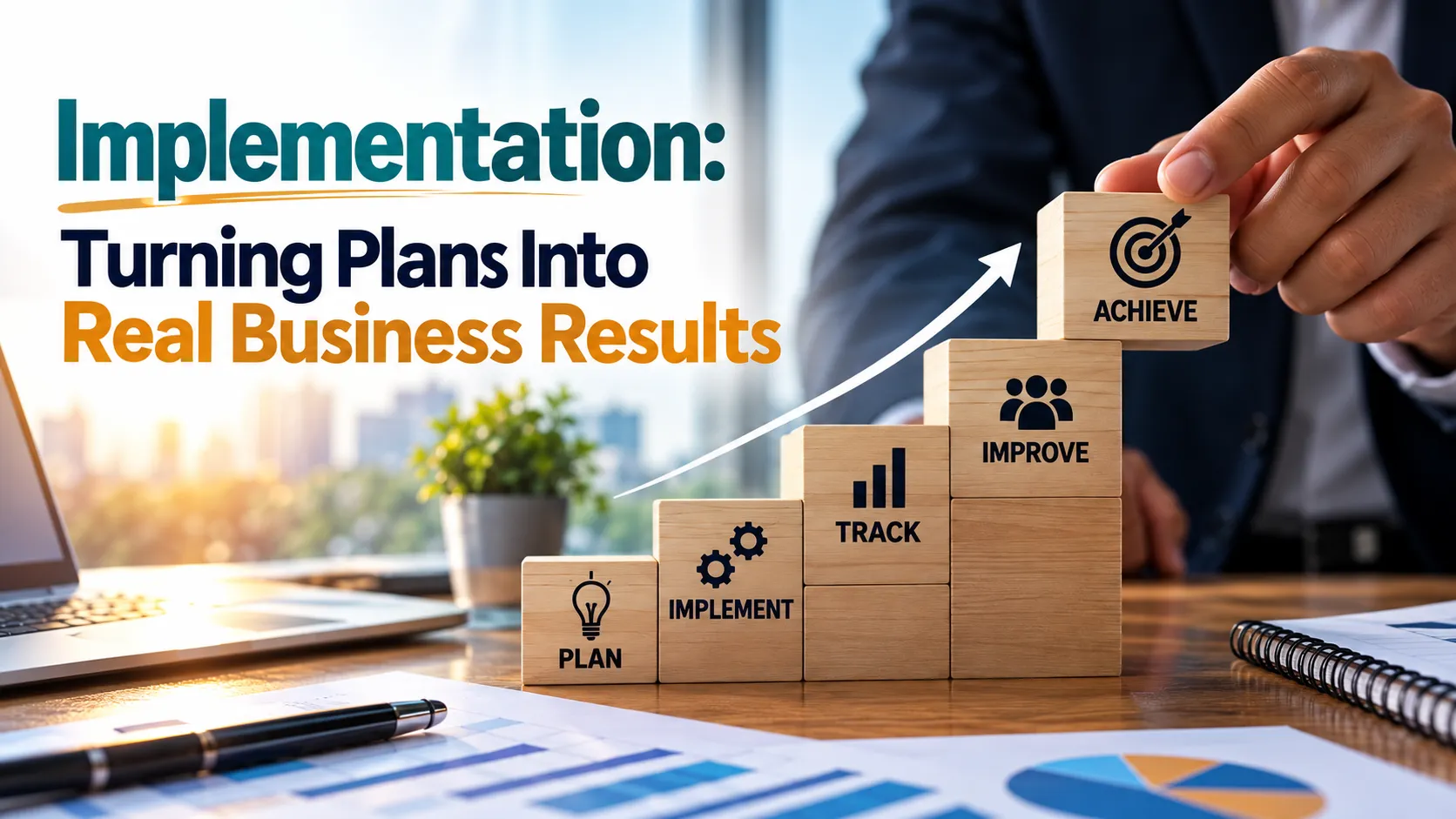
A strong business idea is only valuable when it is turned into action. Companies can spend months developing strategies, setting goals, and identifying opportunities, but results depend on how effectively those plans are executed. This is where implementation becomes essential. A structured implementation process helps businesses move from planning to action while keeping teams focused on priorities, responsibilities, and measurable outcomes.
What Does Implementation Mean in Business?
Many business leaders ask, what does implementation actually mean? In simple terms, implementation is the process of putting a plan, strategy, system, or solution into action. It takes an idea that exists on paper and transforms it into practical steps that employees and teams can follow.
For example, a company may create a strategy to improve customer service, reduce operating costs, or enter a new market. The strategy itself explains what the business wants to achieve. Implementation determines how those goals will be achieved, who will be responsible, what resources are required, and how progress will be measured.
Without effective implementation, even a well-developed strategy may fail to produce meaningful results.
Why Implementation Is Important
Implementation creates the connection between business strategy and actual performance. It gives teams a clear direction and helps ensure that important initiatives are not forgotten after the planning stage.
A successful implementation process can also improve accountability. When employees understand their responsibilities, deadlines, and expected outcomes, it becomes easier to track progress and identify problems before they become serious.
Implementation also helps businesses use their resources more effectively. Time, budget, technology, and employees can be organized around specific priorities instead of being spread across activities that do not support the company's main objectives.

Key Steps in an Effective Implementation Process
Successful implementation usually begins with clear goals. Businesses need to understand exactly what they want to achieve before deciding how to execute the plan. Goals should be realistic, measurable, and connected to the overall business strategy.
The next step is assigning responsibilities. Every major action should have an owner who understands what needs to be completed and when it needs to happen. Clear ownership reduces confusion and keeps projects moving forward.
Resources must also be considered. A strategy may require additional employees, technology, training, funding, or outside support. Identifying these requirements early can prevent delays later in the implementation process.
Communication is another important part of implementation. Employees should understand why changes are happening, how the changes affect their work, and what is expected from them. Consistent communication can help create better alignment across different departments.
Common Challenges During Implementation
Even a strong plan can face problems during execution. One common challenge is resistance to change. Employees may be comfortable with existing processes and may need additional communication or training before adopting new ways of working.
Another challenge is unclear responsibility. If several people assume someone else is handling an important task, deadlines can easily be missed. Businesses can reduce this problem by assigning clear ownership to every important action.
Poor tracking can also affect implementation. Companies should regularly review performance indicators, milestones, and project results. This makes it possible to identify problems early and adjust the strategy when necessary.
How Implementation Consulting Can Help
Some businesses have a strong strategy but need additional support turning it into practical action. Professional implementation consulting can help organizations structure their execution process, establish priorities, align teams, and manage important changes more effectively.
Implementation consultants can provide an outside perspective and help businesses identify gaps between their strategy and current operations. They may also help leadership teams create clearer processes, establish accountability, and track progress toward specific objectives.
The goal is not simply to create another plan. Effective implementation support focuses on helping the organization move from decisions to measurable action.
Measuring Implementation Success
Implementation should be monitored throughout the process rather than reviewed only at the end. Businesses can track key performance indicators, deadlines, employee adoption, operational improvements, and financial results depending on the project.
Regular reviews allow leadership teams to understand what is working and where adjustments are needed. Implementation is rarely a completely fixed process. Market conditions, customer needs, budgets, and internal priorities can change, making flexibility an important part of successful execution.

Final Thoughts
Implementation is what transforms business strategies into real-world results. It provides the structure needed to assign responsibilities, organize resources, measure progress, and keep teams aligned with larger goals.
Understanding what does implementation means is especially important for organizations that want to move beyond planning and create measurable change. With clear objectives, strong communication, accountability, and regular performance reviews, businesses can improve the way they execute important initiatives and increase the chances of achieving their strategic goals.
Read More: Solving Critical Manufacturing Challenges in Aerospace and Defense
