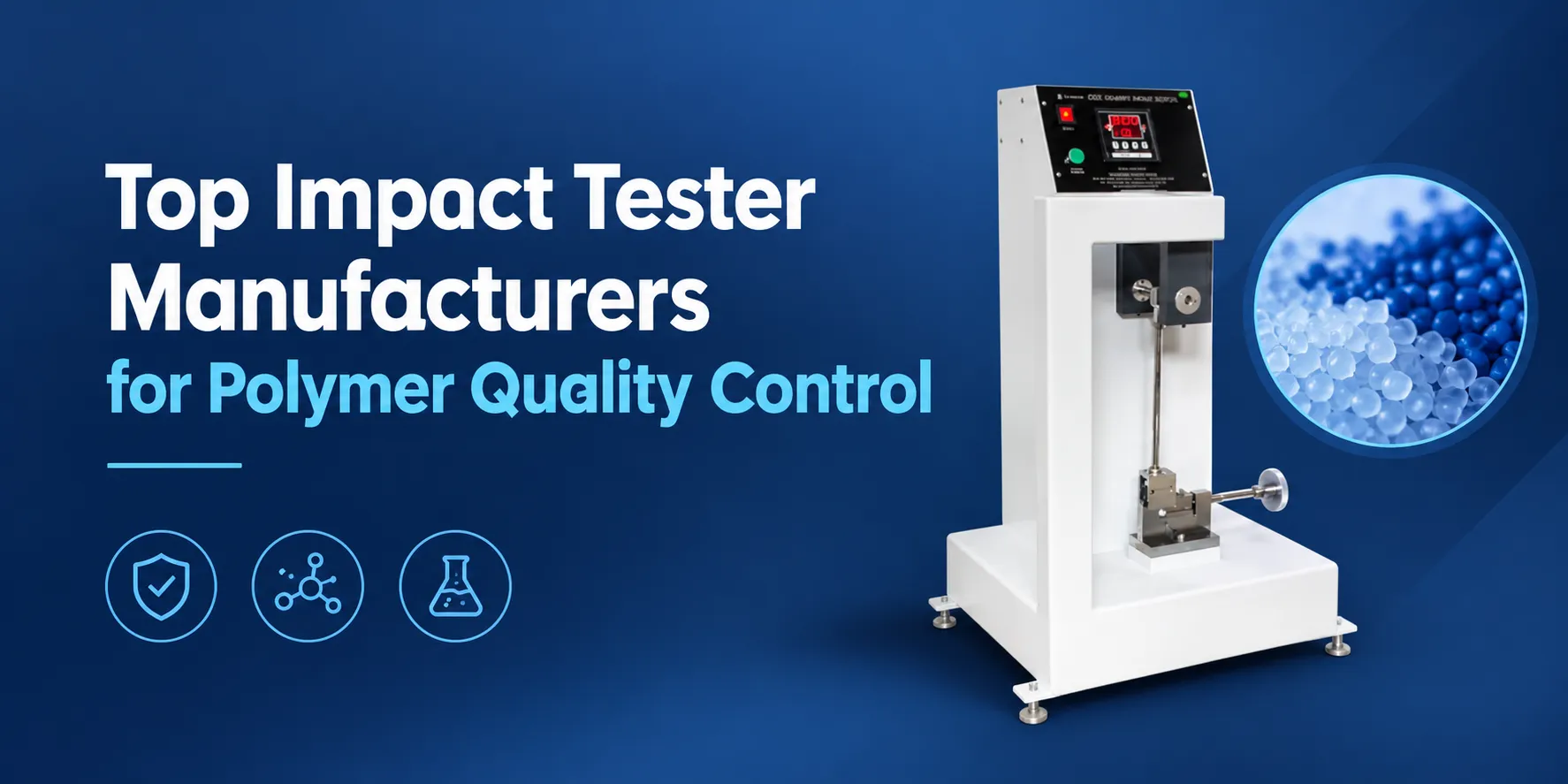
In the fast-evolving world of polymer manufacturing, ensuring material durability and structural integrity is paramount. From high-stress automotive components and aerospace parts to everyday consumer packaging and medical devices, polymers are subjected to harsh environmental conditions and tough mechanical stresses. To prevent catastrophic field failures, maintain quality assurance, and meet stringent regulatory standards, manufacturers rely heavily on precise, high-performance lab testing instruments to evaluate toughness, resilience, and resistance to sudden forces.
Among these critical evaluations, impact strength stands out as a foundational metric. Measuring how much energy a material absorbs during a high-speed fracture helps materials scientists, product designers, and quality engineers select the ideal raw resin grades, optimize additive formulations, and refine production processes for maximum durability.
Why Impact Testing Matters in Polymer Quality Control
Polymer quality control requires rigorous evaluation under dynamic, high-strain-rate load conditions. While standard tensile, flexural, and hardness tests measure static or slow-applied resistance, impact testing simulates real-world sudden shocks, drops, and collisions. Without proper plastic testing instruments, undetected brittleness or hidden structural flaws can lead to severe product failures, safety hazards, and costly recalls in end-use applications.
Key benefits of impact testing include:
- Predicting real-world product reliability under severe drop forces, sudden collisions, and unexpected mechanical shocks.
- Verifying compliance with strict international quality and performance standards such as ISO, ASTM, and DIN.
- Maintaining consistent batch-to-batch quality across polymer compounding, extrusion, and injection molding production lines.
Key Types of Impact Testing Instruments
Several specialized testing methodologies exist to measure impact resistance, depending on the specific material geometry, rigidness, and industry standard requirements. Choosing the correct Charpy Impact tester, Izod system, or drop-weight apparatus is vital for achieving accurate, repeatable, and reproducible test results.
1. Charpy Impact Tester
The Charpy Impact tester is widely utilized across industrial quality control and research laboratories. In this setup, a notched or unnotched bar specimen is supported horizontally at both ends as a simple beam. A heavy, calibrated pendulum swings down to strike the center of the specimen opposite the notch, precisely measuring the energy absorbed during high-speed fracture.
2. Izod Impact Tester
Unlike the Charpy setup, the Izod method clamps the test specimen vertically as a cantilever beam, with the notch facing the direction of impact. The swinging pendulum strikes the upper free end of the specimen above the clamp line. This technique is particularly effective for evaluating notch sensitivity, crack propagation, and fracture toughness in rigid plastics and composites.
3. Drop Dart Impact Tester
Specifically designed for flexible plastic films, sheets, and thin synthetic membranes, this instrument drops a free-falling dart with a standardized hemispherical head from a specified height onto a securely clamped pneumatic specimen holder. It determines the impact energy required to puncture or cause 50% failure in film samples.
Top Impact Tester Manufacturers
Selecting a trusted and proven equipment supplier ensures exceptional measurement precision, robust construction, operator safety, and comprehensive long-term instrument calibration support. Below are three leading global manufacturers at the forefront of the polymer testing industry.
1. Testronix
Testronix Instruments is a well-established and prominent manufacturer known for engineering reliable, durable, and user-friendly lab testing instruments. Their polymer testing portfolio includes robust Izod and Charpy impact testers crafted to meet exact international standards while providing high efficiency in routine QA workflow.
Key Highlights:
- High-precision digital readouts and sturdy microprocessor-based displays.
- Cost-effective solutions tailored for quality assurance and industrial production lines.
- Ergonomic safety enclosures and intuitive controls for operator safety.
2. ZwickRoell
ZwickRoell is a global leader and innovator in mechanical material testing equipment, world-renowned for its premium, highly precise pendulum impact systems. Their flexible, modular testing platforms serve advanced research institutes, university laboratories, and high-throughput industrial quality control environments.
Key Highlights:
- Advanced testXpert software for automated data acquisition and analysis.
- Modular designs capable of handling high-capacity testing requirements.
- Strict compliance with ASTM D256, ISO 179, and ISO 180 standards.
3. Instron
Instron is globally recognized for pioneering engineering and state-of-the-art mechanical testing instruments. Their advanced pendulum and high-energy drop-tower impact systems offer exceptional measurement accuracy, high-speed data sampling, and superior versatility for sophisticated polymer characterization and failure analysis.
Key Highlights:
- Instrumented impact options to record high-speed load-deformation curves.
- Robust pneumatic clamp designs and safety interlocks for seamless testing.
- Extensive global support network for seamless calibration and maintenance.
How to Choose the Right Impact Tester
When selecting from the top plastic testing instruments on the market, carefully evaluate your laboratory's specific operational needs and long-term testing goals:
- Standard Alignment: Verify that the instrument strictly complies with your target ISO (e.g., ISO 179, ISO 180), ASTM (e.g., ASTM D256, ASTM D1709), or DIN standard specifications.
- Material Range: Choose appropriate pendulum capacities, hammer energy ratings, or dart weight ranges suited for your specific polymer types and specimen thicknesses.
- Data Requirements: Decide whether standard energy absorption readings are sufficient or if advanced instrumented impact capabilities for full high-speed load-deformation curves are needed.
Conclusion
Investing in top-quality lab testing instruments is an essential step toward building an uncompromised polymer quality control process. By partnering with leading equipment manufacturers like Testronix, ZwickRoell, or Instron, material producers and converters can consistently guarantee product safety, optimize material usage, and uphold the highest standards of market excellence.
